Termite Inspection and Treatment in Clarksville
If you find winged termites inside or mud tubes on the foundation, get a professional inspection before you agree to any treatment. In Tennessee, termite work has to be done under a written contract, and state rules set what that contract must say.
Call (931) 416-0793Ask for an inspection
Licensed companies only: a Tennessee Department of Agriculture charter, or a Kentucky license on the KY side.
On this page
Termites damage wood slowly, so you have time to get the inspection right and compare a second quote. Ask for a free inspection and a written price before any treatment.
The termite you are dealing with
UT Extension calls subterranean termites the most destructive wood-feeding insects in Tennessee. The three common species here all live in the soil, and the eastern subterranean termite is the one most people see. Colonies enter a house through wood touching the soil or foundation walls. On slab homes they come up through expansion joints and cracks, or through openings for plumbing. UT notes the Formosan termite has been brought into the Memphis area in the past but is not established in Tennessee.
The federal government treats this whole region as termite country. VA's local requirements page lists Tennessee and Kentucky among the states where wood-destroying insect information is required for the entire state on VA loans. Every VA purchase in Clarksville or Hopkinsville needs a termite report for that reason.
Signs worth calling about
- Winged termites indoors. The University of Kentucky's termite guide says this almost always indicates an infestation that warrants treatment. They gather at windows and doors because they are drawn to light.
- Mud tubes on foundation walls or floor joists, typically about the diameter of a pencil. An empty tube does not prove the termites are gone.
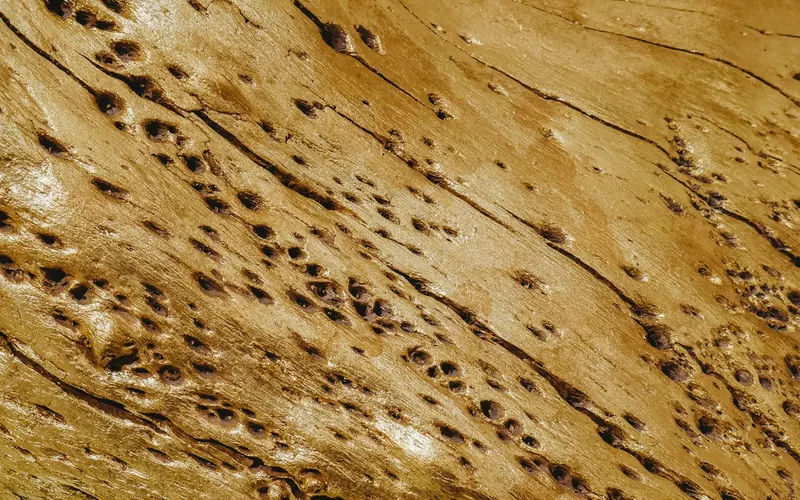
- Wood hollowed out along the grain with bits of dried soil inside the galleries. Carpenter ant damage looks clean and smooth instead.
- Tiny holes in drywall with soil around the edges.
A swarm coming out of a stump or woodpile in the yard does not by itself mean the house is infested. Swarmers coming up next to the foundation or out of an attached porch or patio are a different story. Our termite swarm season guide covers how to tell termites from flying ants, and the ant control page covers carpenter ants.
What the inspection should give you
UT Extension recommends a professional termite inspection at least once a year. The inspector checks the wood framing nearest the soil, looking for mud tubes and shed wings, or for live termites.
Tennessee rule 0080-09-04-.08(3) sets the paperwork. Before any termite treatment, the company has to execute a written contract in duplicate and give you a copy. Each contract must include:
- the date of inspection and a graph of the property showing where visible wood destroying insects or their damage were found
- a provision letting the contract transfer to later owners or renters within its term
- a unique contract number
That graph is worth reading. It tells you what the inspector actually saw, and it becomes the baseline for every later inspection.
If you are not sure whether what you found is termites, send a photo first.
Liquid soil treatment vs bait stations
University of Kentucky entomologist Michael Potter's homeowner guide splits termite treatment into two categories. I find it the clearest plain-language explanation of the choice.
Liquid termiticides are injected into the soil along the foundation and beneath slabs, often hundreds of gallons on one house. The goal is a long-lasting treated zone that termites cannot cross. Older products repelled termites. Current ones such as fipronil and imidacloprid, along with chlorantraniliprole, are non-repellent, so termites tunneling into treated soil die. The guide says these are usually more reliable at controlling an infestation on the first attempt, and that all liquid termiticides are supposed to control termites for at least five years when applied by the label.
Baits are cellulose mixed with a slow-acting insecticide, set in plastic stations in the ground around the house. Termites feed and share the bait with the colony. The tradeoff is time. Potter writes that it can take weeks or months for termites to find the stations, and months more to get control. Potter suggests baits for people who are uneasy about liquid treatment around the house.
Spot treatment, meaning treating only where termites were seen, is the option I would be most wary of. Potter calls it a gamble except for warranty retreatments, and notes most firms will not warrant it. Tennessee allows less than complete treatments only if the applicator tells you the possible outcomes. Your acceptance must appear in bold in the contract with your initials, and the untreated areas must be marked on the graph. If your contract has a bolded line like that, you are buying a partial job.
I would not treat a house yourself. Potter says retail termite products will seldom eradicate an existing infestation, and UT says special equipment and training are needed.
Termite bonds and what to ask
"Bond" is the local word for the ongoing termite contract. Tennessee's rule sets a floor for it:
- Any termite control contract must include a one-year warranty providing for retreatment.
- A damage guarantee is optional. If the contract does not include one, it has to say so in letters one-half inch tall on the front.
- For every property under contract, the company must inspect once a year and record the date. If it finds termite activity that was not on the earlier graph, it must treat and draw a new graph.
- You can ask for copies of the annual inspection and treatment records, and the company has 48 hours to provide them.
Before you sign or renew, ask:
- Does the contract cover retreatment only, or also repair of new damage?
- What is the annual renewal fee, and can it go up?
- What does the contract exclude? Potter notes some firms will not warrant a house with wells or sub-slab heat ducts, or one with crawl spaces nobody can reach.
- If I sell, does the contract go to the buyer? Under the state rule it should be transferable within its term.
A rushed sale is a red flag. Potter's advice is to take your time and avoid firms that push you to sign that day with specials or scare tactics. I agree. Our guide on whether a quote is fair has more.
What termite work costs
These are published national figures, not our quote. This Old House (updated June 17, 2026) lists termite inspections at $75 to $325, spot treatments at $350 to $1,000 and bait systems at $400 to $3,000. More ranges are in the Clarksville pest control cost guide.
Termite letters for closing
When a house is sold, the lender usually wants a wood destroying insect report on the NPMA-33 form, often called a termite letter. It reports visible evidence on the inspection date only and is not a warranty. Our VA loan termite inspection guide covers who pays and what happens if the report shows activity.
We only refer companies chartered by the Tennessee Department of Agriculture (and licensed by the Kentucky Department of Agriculture for Kentucky addresses). You can check a company's charter yourself with our license check guide.
Questions people ask
What is a termite bond in Tennessee?
It is the ongoing termite control contract. Tennessee rules require a one-year retreatment warranty and an annual inspection for every property under contract; a damage guarantee is optional.
Are termite baits or liquid treatments better?
University of Kentucky Extension says current non-repellent liquids are usually more reliable on the first attempt. Baits can take weeks or months for termites to find, then months more for control.
How long does a liquid termite treatment last?
University of Kentucky Extension says all liquid termiticides are supposed to control termites for at least five years when applied by the label. Termites that return usually found an untreated gap.
Do I need a termite inspection every year?
UT Extension recommends a professional inspection at least once a year. If you have a termite contract, Tennessee rules require the company to inspect annually.
Can I treat termites myself?
Not for an infested house. University of Kentucky Extension says retail termite products will seldom eradicate an existing infestation.
Does my termite contract transfer when I sell the house?
Tennessee rule 0080-09-04-.08 requires termite contracts to include a provision for transfer to later owners or renters within the contract term.
Sources
- UT Extension PB1344, Subterranean Termite Control (Vail et al.)
- UT Extension PB1303, Managing Pests Around the Home (2021)
- University of Kentucky Entfact-604, Termite Control: Answers for Homeowners (rev. 9/13/2018)
- Rules of the Tennessee Department of Agriculture, rule 0080-09-04-.08(3) Wood destroying organisms (rev. December 2021)
- VA Home Loans, Local Requirements (last updated July 11, 2025)
- NPMA, Suggested Guidelines for Completing the NPMA-33 (v1.3, 08/2019)
- This Old House, How Much Does Termite Treatment Cost? (updated 06/17/2026)